



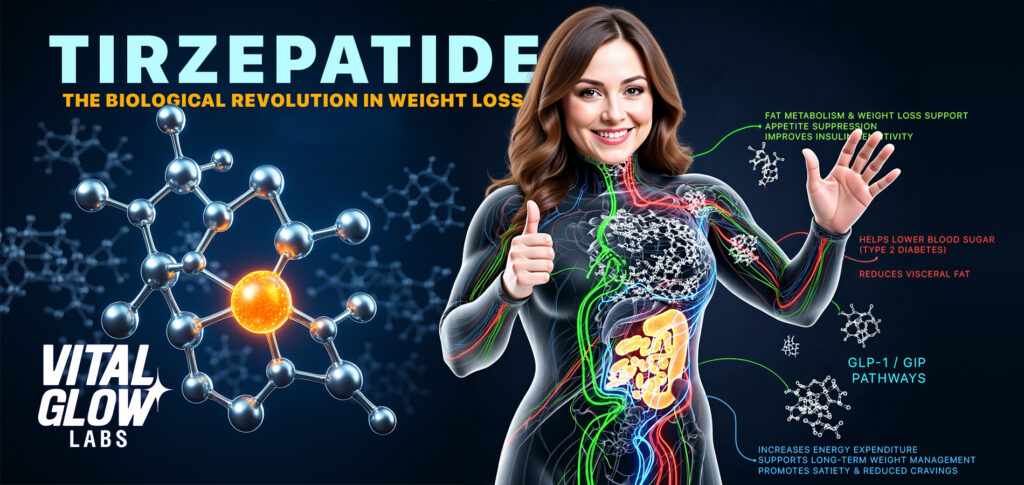
An educational overview of incretin-hormone research — the science behind the GLP-1 and GIP receptor pathways
Few areas of metabolic science have moved as quickly in the last decade as the study of incretin hormones — the gut-derived signals that help the body coordinate blood sugar, appetite and energy balance after eating. This article is a plain-language look at that research: what these hormones do, why single molecules that act on more than one receptor have drawn so much scientific attention, and how approved medicines in this class differ from unregulated “research” compounds. It is background reading only — not medical advice, and not a recommendation to use any medicine or compound.
What incretin hormones do
Incretin hormones are released by the gut in response to food. Two of the most studied are GLP-1 (glucagon-like peptide-1) and GIP (glucose-dependent insulinotropic polypeptide). In research models they influence several connected processes:
- Glucose-dependent release of insulin, alongside lower glucagon output
- Slower gastric emptying, which affects how quickly a meal is absorbed
- Signalling to appetite centres in the brain that contributes to satiety
One molecule, more than one receptor
Natural incretin signalling involves several hormones at once. A major line of research has been to design single synthetic peptides that engage more than one of these receptors — for example GLP-1 and GIP together (a “dual agonist”), or GLP-1, GIP and the glucagon receptor together (a “triple agonist”). The hypothesis studied in the literature is that acting on several pathways at once may produce broader metabolic effects than acting on one alone. Tirzepatide is the most-studied dual GLP-1 / GIP agonist; retatrutide is an investigational triple agonist still in clinical research.
What the clinical literature covers
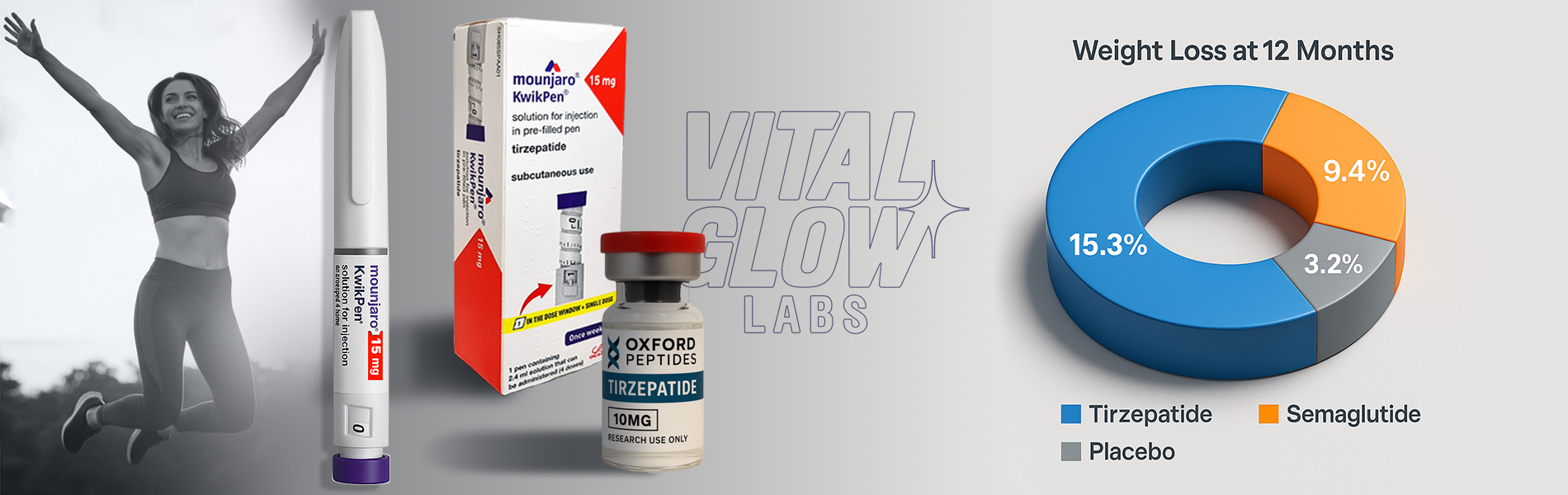
Medicines in this class have been evaluated in large peer-reviewed trials — published in journals such as The New England Journal of Medicine and JAMA — mainly in the context of type 2 diabetes and, more recently, chronic weight management. On the strength of that evidence, medicines regulators in several countries (including the FDA in the United States and NICE in the United Kingdom) have authorised specific molecules as prescription medicines. Like all medicines they have a known side-effect profile, most commonly gastrointestinal. The exact findings, eligibility criteria and safety information for any given medicine are set out in its approved regulatory labelling and are a matter for a qualified clinician.
Approved medicines are not the same as “research peptides”
Two very different things are often discussed together and should be kept separate:
⚠ Warning. Peptides obtained from unregulated sources — regardless of the name on the label — can carry serious and unpredictable health risks. Research-use-only compounds are not medicines and are not intended for human use.
Why the research interest goes beyond weight
Because these pathways touch several systems at once, ongoing research also examines their effects on markers of cardiovascular and liver health, not only body weight. That work is continuing, and conclusions differ between molecules and study populations. None of it changes the basic point: these are prescription medicines or research compounds, not consumer products.
This article is published by Vital Glow Labs for scientific-education purposes only. It is not medical advice, a diagnosis, or a recommendation to use any medicine, supplement or compound. Prescription medicines mentioned here are available only through licensed healthcare providers. Vital Glow Labs does not sell or supply these medicines for consumer use; any research peptides in our catalogue are supplied strictly for laboratory research use only. Always speak with a qualified clinician before making decisions about your health.